
South Korea moves to compress the 9–10 year nuclear-plant build cycle to feed AI demand
TL;DR
South Korea's presidential chief of staff Kang Hoon-sik said on June 30 the government will study how to cut the 9–10-year nuclear build cycle, to feed AI data centers and chip fabs. Net AI-driven power demand hits 262 TWh in 2026, 3× the 2023 level.
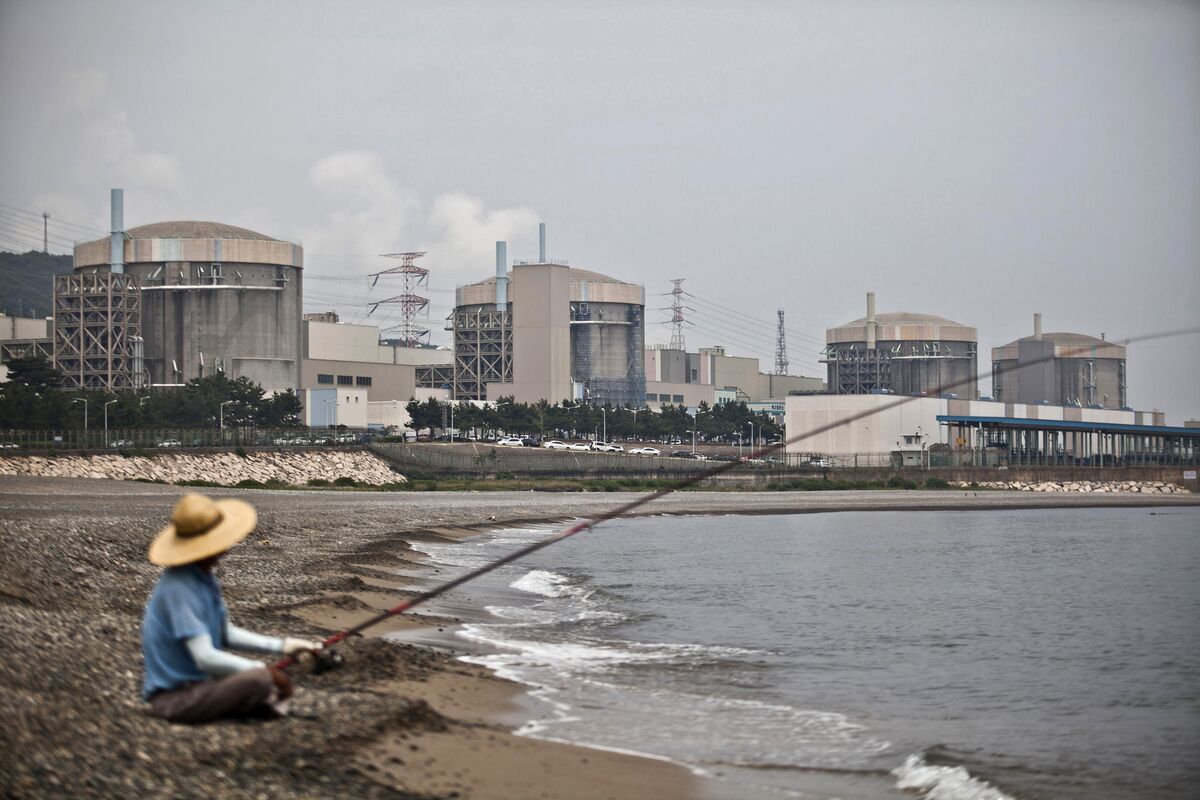
On June 30, South Korea's presidential chief of staff Kang Hoon-sik went public: "Building a nuclear plant typically takes 9 to 10 years. We will study how to compress that cycle." The specifics will land in the country's upcoming 12th Basic Plan for Long-term Electricity Supply and Demand.
The driver is the AI load. Nuclear currently delivers about 1/3 of South Korea's electricity, and that base does not stretch to the incoming data-center and chip-fab demand. AI data-center investment commitments through 2035 already exceed 1,000 trillion won (about $725 billion); the Chungcheong region semiconductor-packaging plant runs 81 trillion won; four southwestern chip fabs come in near 800 trillion won. Bloomberg's tracking puts South Korea's net AI-related power increment at 262 TWh in 2026 — triple 2023's level — pushing AI's share of renewable-power offtake from 8.8% to 17.9%.
The existing backlog is already moving. In January 2026, the Lee Jae-myung administration cleared 2 new large reactors under the 11th Basic Plan to proceed. The domestic small modular reactor i-SMR is targeted to break ground in 2031 and grid-tie in 2035. But i-SMR is still in engineering, and the 9–10-year build window on full-scale reactors means a 2026 groundbreaking can't carry the 2035 load curve — compressing the cycle becomes the binding constraint.
Compressing it means rewriting approvals. Bloomberg's reporting points to the presidential office's direction: streamline regulatory review and run construction phases in parallel, replacing the sequential safety-siting-design-build review chain with partial overlap. For reference, the US NRC takes 5–7 years for a combined construction-operating license; South Korea wants the same gates inside five years, which forces revisions to the Atomic Energy Act.
If it works, the "nuclear speed-up order" plus i-SMR holds the electricity floor under Korea's AI compute build-out through 2035, Samsung and SK hynix's HBM super-cycle keeps running, and the country's top-DRAM position is locked in. If it doesn't, a parallelized review process built under speed pressure collides with the first incident in the chain — nuclear history tells executive orders the 9-year build wasn't just bureaucracy.
via Bloomberg / Sina Tech / World Nuclear Association / IEEFA
The driver is the AI load. Nuclear currently delivers about 1/3 of South Korea's electricity, and that base does not stretch to the incoming data-center and chip-fab demand. AI data-center investment commitments through 2035 already exceed 1,000 trillion won (about $725 billion); the Chungcheong region semiconductor-packaging plant runs 81 trillion won; four southwestern chip fabs come in near 800 trillion won. Bloomberg's tracking puts South Korea's net AI-related power increment at 262 TWh in 2026 — triple 2023's level — pushing AI's share of renewable-power offtake from 8.8% to 17.9%.
The existing backlog is already moving. In January 2026, the Lee Jae-myung administration cleared 2 new large reactors under the 11th Basic Plan to proceed. The domestic small modular reactor i-SMR is targeted to break ground in 2031 and grid-tie in 2035. But i-SMR is still in engineering, and the 9–10-year build window on full-scale reactors means a 2026 groundbreaking can't carry the 2035 load curve — compressing the cycle becomes the binding constraint.
Compressing it means rewriting approvals. Bloomberg's reporting points to the presidential office's direction: streamline regulatory review and run construction phases in parallel, replacing the sequential safety-siting-design-build review chain with partial overlap. For reference, the US NRC takes 5–7 years for a combined construction-operating license; South Korea wants the same gates inside five years, which forces revisions to the Atomic Energy Act.
If it works, the "nuclear speed-up order" plus i-SMR holds the electricity floor under Korea's AI compute build-out through 2035, Samsung and SK hynix's HBM super-cycle keeps running, and the country's top-DRAM position is locked in. If it doesn't, a parallelized review process built under speed pressure collides with the first incident in the chain — nuclear history tells executive orders the 9-year build wasn't just bureaucracy.
via Bloomberg / Sina Tech / World Nuclear Association / IEEFA