

Anthropic Puts Claude Cowork on Your Phone — Agent Keeps Working After the Laptop Closes
TL;DR
Anthropic extends its Claude Cowork background agent to web, iOS and Android; 90% of its 1.2M May sessions weren't coding.
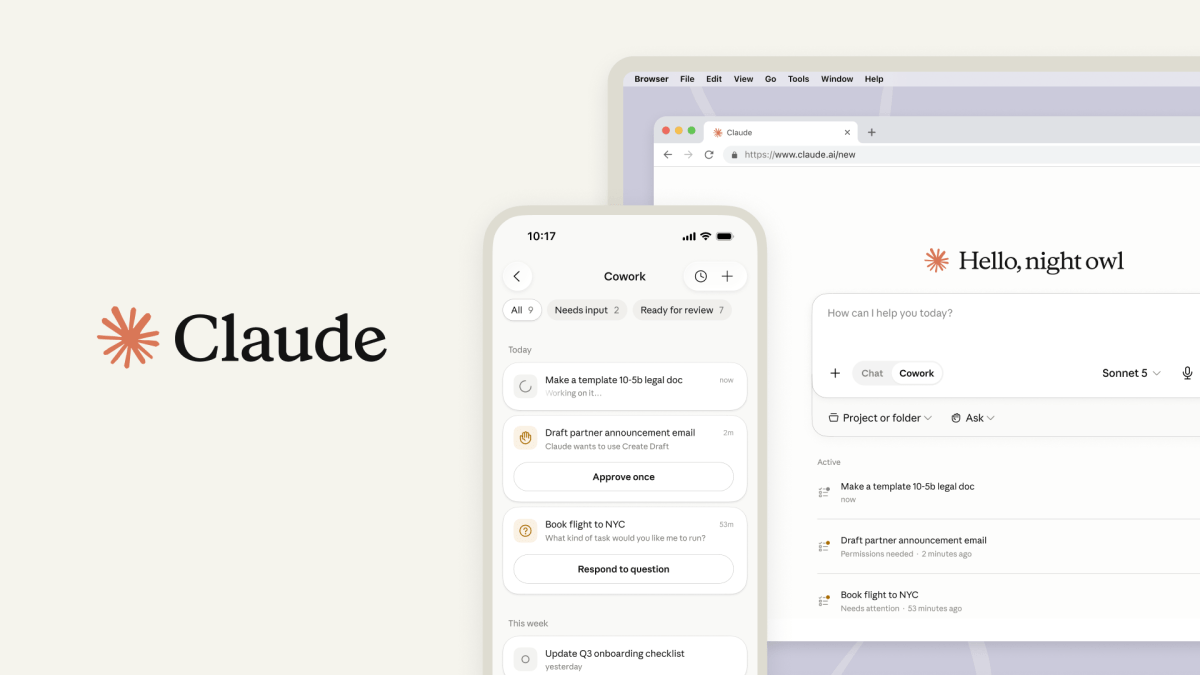
Anthropic on July 7 said Claude Cowork, launched on desktop in January, is expanding to the web, iOS and Android. Beta access starts with Max subscribers and rolls out over the next several weeks. Cowork is not a chat window — it takes multi-step assignments, runs them in the cloud after the user closes the laptop, reads mail, opens files, checks calendars and moves across apps, only pinging the phone when a decision only a human can make comes up.
Anthropic disclosed May usage in the announcement: 1.2 million Cowork sessions from more than 600,000 organizations. Business process work made up 33.4%, content and copywriting 16.4%, and software development just 8.7%. "While coding is still one of the uses of AI that gets the most attention, the use of AI for everyday business work is on the rise," Anthropic wrote on its blog.
The contrast is the point. Coding agents — Cursor, Claude Code, GPT-Codex — have owned the headlines for half a year, trading benchmark scores. Anthropic's own numbers show more than 90% of Cowork traffic never touches an IDE. The heaviest recurring jobs are overnight email digests, morning industry briefings, deck drafts, spreadsheet cleanups — administrative white-collar work.
Anthropic doubled Cowork usage limits through August 5 and folded Cowork and Claude chat into a single workspace with shared file access. TechCrunch called the move "the coding agent wars spilling into the rest of the office."
Cowork shares the computer-use and tool-use plumbing that powers Claude Code, but the interface is stripped down for non-technical users. 9to5Mac quoted Anthropic: "When Claude reaches a call only you can make, it asks, and the question reaches your phone."
If it works, Anthropic captures the white-collar workflow market — bigger than coding. If it doesn't, 600,000 organizations burn their beta allotment and refuse to upgrade to Max, and Cowork becomes a free giveaway bundled with Claude Code.
via TechCrunch / 9to5Mac / Help Net Security
Anthropic disclosed May usage in the announcement: 1.2 million Cowork sessions from more than 600,000 organizations. Business process work made up 33.4%, content and copywriting 16.4%, and software development just 8.7%. "While coding is still one of the uses of AI that gets the most attention, the use of AI for everyday business work is on the rise," Anthropic wrote on its blog.
The contrast is the point. Coding agents — Cursor, Claude Code, GPT-Codex — have owned the headlines for half a year, trading benchmark scores. Anthropic's own numbers show more than 90% of Cowork traffic never touches an IDE. The heaviest recurring jobs are overnight email digests, morning industry briefings, deck drafts, spreadsheet cleanups — administrative white-collar work.
Anthropic doubled Cowork usage limits through August 5 and folded Cowork and Claude chat into a single workspace with shared file access. TechCrunch called the move "the coding agent wars spilling into the rest of the office."
Cowork shares the computer-use and tool-use plumbing that powers Claude Code, but the interface is stripped down for non-technical users. 9to5Mac quoted Anthropic: "When Claude reaches a call only you can make, it asks, and the question reaches your phone."
If it works, Anthropic captures the white-collar workflow market — bigger than coding. If it doesn't, 600,000 organizations burn their beta allotment and refuse to upgrade to Max, and Cowork becomes a free giveaway bundled with Claude Code.
via TechCrunch / 9to5Mac / Help Net Security