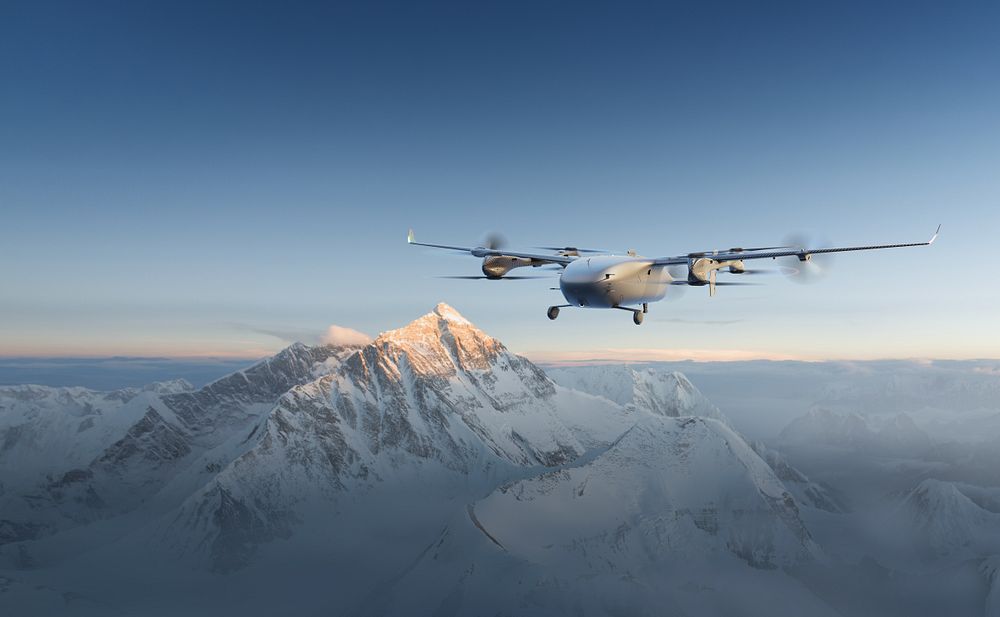


DJI EV50 flies 12m above Everest summit — first electric eVTOL cargo drone, 50kg payload, hunts the helicopter
TL;DR
DJI's first electric eVTOL cargo drone EV50 hit 8,861m on Everest's north face — 12m above the summit — carrying 50kg for Peking University's ozone research.
DJI unveiled its first electric vertical-takeoff cargo drone EV50 on July 9 alongside 12 days of measured data from Mount Everest's north face: a peak working altitude of 8,861 metres — 12 metres above the summit at 8,848.86 m and a new record for effective eVTOL operating altitude.
EV50 is DJI's first purpose-built airframe for 100-kilometre-scale aerial logistics: 50 kg payload, 270-litre cargo bay, 150 km unloaded range, 160 km/h top speed, IP55, all-electric VTOL with no runway needed. Spokesperson Zhang Xiaonan told media the product line takes direct aim at the cost and risk model of traditional helicopters.
The north-face mission was led by Peking University's College of Environmental Sciences and Engineering. EV50 flew 32 sorties in the 12-day window; 12 carried ozone-monitoring instruments and executed spiral climbs plus round-trip reconnaissance for fine-grained sampling of upper-troposphere pollutants. Single-flight continuous climb topped out at 3,730 metres. Low pressure, extreme cold, strong gusts — all three constraints cleared.
On the south face, DJI's FC100 cargo drone handled logistics: 10+ tonnes of supplies moved, 2,300 oxygen cylinders ferried, close to 3,000 kg of waste hauled out, average one-way trip 8 minutes.
DJI first went to Everest in 2009. In 2025 a Mavic 3 filmed the 8,848.86 m summit — the first human drone shot of the peak. This time DJI staged EV50's public debut 12 metres above it.
Win the bet, and EV50 becomes the default replacement for helicopters in plateau, polar, and disaster-zone missions. Lose it, and a 50 kg payload eventually caps what non-mineral-water cargo the airframe can carry.
via ITHome / Science and Technology Daily / sUAS News
EV50 is DJI's first purpose-built airframe for 100-kilometre-scale aerial logistics: 50 kg payload, 270-litre cargo bay, 150 km unloaded range, 160 km/h top speed, IP55, all-electric VTOL with no runway needed. Spokesperson Zhang Xiaonan told media the product line takes direct aim at the cost and risk model of traditional helicopters.
The north-face mission was led by Peking University's College of Environmental Sciences and Engineering. EV50 flew 32 sorties in the 12-day window; 12 carried ozone-monitoring instruments and executed spiral climbs plus round-trip reconnaissance for fine-grained sampling of upper-troposphere pollutants. Single-flight continuous climb topped out at 3,730 metres. Low pressure, extreme cold, strong gusts — all three constraints cleared.
On the south face, DJI's FC100 cargo drone handled logistics: 10+ tonnes of supplies moved, 2,300 oxygen cylinders ferried, close to 3,000 kg of waste hauled out, average one-way trip 8 minutes.
DJI first went to Everest in 2009. In 2025 a Mavic 3 filmed the 8,848.86 m summit — the first human drone shot of the peak. This time DJI staged EV50's public debut 12 metres above it.
Win the bet, and EV50 becomes the default replacement for helicopters in plateau, polar, and disaster-zone missions. Lose it, and a 50 kg payload eventually caps what non-mineral-water cargo the airframe can carry.
via ITHome / Science and Technology Daily / sUAS News