
Zhengzhou hits 100,000 domestic AI cards in 5 months — China's biggest single compute pool goes live
TL;DR
China's national supercomputing internet core node goes live in Zhengzhou with 100,000+ domestic AI accelerators — the country's largest single pool, tripled from 30k in 5 months.
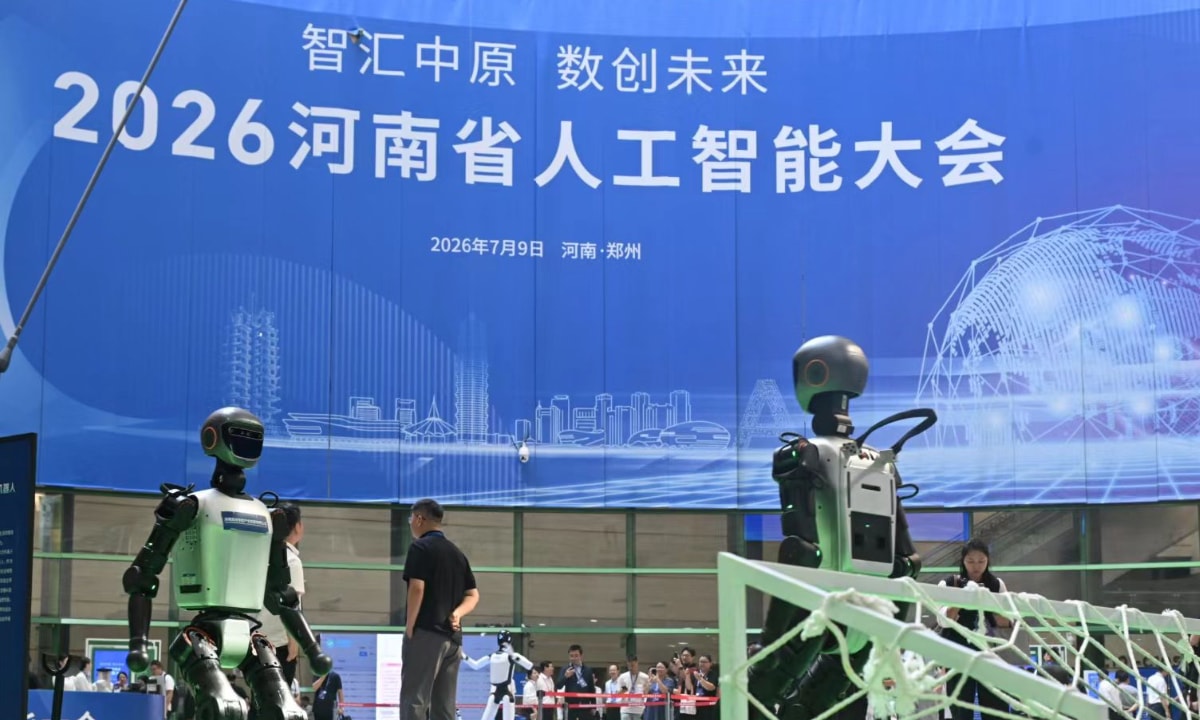
China's National Supercomputing Internet Core Node went formally live on July 9 at the 2026 Henan AI Conference in Zhengzhou, plugging in more than 100,000 domestic AI accelerator cards — the largest single intelligent-compute pool on the platform since launch and the country's first 10,000+ card super-intelligent fusion pool.
The scaling curve is the other half of the story. On February 5, the Zhengzhou node started trial with 30,000 cards. Mid-April it doubled to 60,000. By July 9 it crossed 100,000. 3× expansion in 5 months, all on domestic AI accelerators, backed by Sugon's scaleX 10,000-card supercluster, which dispatches over 30,000 cards externally.
Zoomed out to the full national compute grid, Zhengzhou is just the biggest tile. The National Supercomputing Internet now aggregates 3.5 million CPU cores, 250,000 GPU cards, 1.4 million registered users, 7,300+ application services, 1,500+ adapted large models, and 11.3 million+ monthly access.
Confirmed heavy workloads include protein folding simulation, trillion-atom molecular dynamics, ultra-large turbulence, covering materials science, electromagnetics, quantum computing, biomedicine, astronomy and meteorology.
Through the past year of tightening US GPU export controls, Zhengzhou went from 30,000 to 100,000 cards in 5 months — filling the "no more H100s" gap entirely on Sugon domestic silicon.
Win the bet, and China's trillion-parameter training in 2026 stops depending on a single import-GPU supply curve. Lose it, and the real training throughput of 100,000 domestic cards only surfaces after the first public benchmarks land 6 months out.
via Global Times / MyDrivers / Sina Finance
The scaling curve is the other half of the story. On February 5, the Zhengzhou node started trial with 30,000 cards. Mid-April it doubled to 60,000. By July 9 it crossed 100,000. 3× expansion in 5 months, all on domestic AI accelerators, backed by Sugon's scaleX 10,000-card supercluster, which dispatches over 30,000 cards externally.
Zoomed out to the full national compute grid, Zhengzhou is just the biggest tile. The National Supercomputing Internet now aggregates 3.5 million CPU cores, 250,000 GPU cards, 1.4 million registered users, 7,300+ application services, 1,500+ adapted large models, and 11.3 million+ monthly access.
Confirmed heavy workloads include protein folding simulation, trillion-atom molecular dynamics, ultra-large turbulence, covering materials science, electromagnetics, quantum computing, biomedicine, astronomy and meteorology.
Through the past year of tightening US GPU export controls, Zhengzhou went from 30,000 to 100,000 cards in 5 months — filling the "no more H100s" gap entirely on Sugon domestic silicon.
Win the bet, and China's trillion-parameter training in 2026 stops depending on a single import-GPU supply curve. Lose it, and the real training throughput of 100,000 domestic cards only surfaces after the first public benchmarks land 6 months out.
via Global Times / MyDrivers / Sina Finance