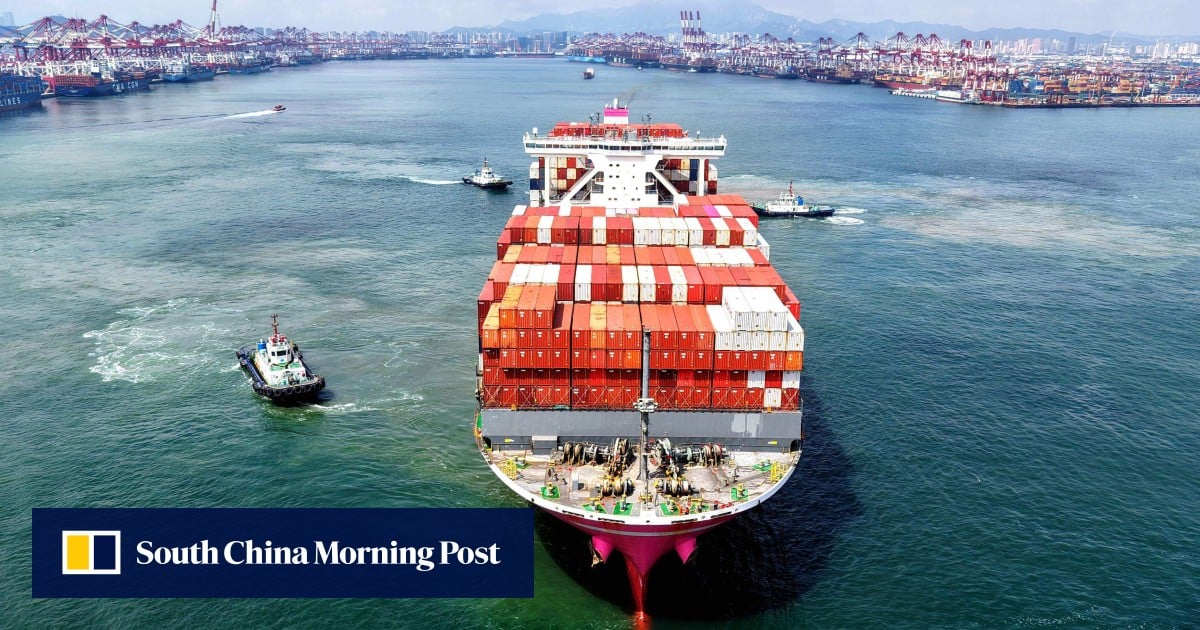

China temporarily bans helium exports — Qatar plant offline, 80% of China's supply is imported, and Russian gas re-exports get cut
TL;DR
China's MOFCOM and customs slap an immediate temporary helium export ban on July 10 as Iran-war shutdowns hit Qatar's supply. China imports 80% of its helium but has been the key re-export path for Russian gas.
China's Ministry of Commerce and General Administration of Customs published joint Announcement No. 29 on July 10: a temporary export ban on helium (HS code 2804290010), effective immediately, invoked under the Foreign Trade Law. Two paragraphs, no end date, "further adjustments to be announced separately."
This isn't offense — it's forced defense. China itself imports over 80% of its helium (per commodity data house SCI99), with no domestic surplus to spare. But China is also the largest transit exporter of Russian helium — Russian gas imported into China and then re-exported to European and Asian buyers. This ban chops off the "Russia → China → global" replacement corridor that has developed over the past two years.
The trigger is the Iran war. Renewed US-Israel-Iran conflict has strained shipping through the Strait of Hormuz and forced a major plant in Qatar — the world's second-largest helium producer — offline. Global helium is already scarce, with production concentrated in the US, Qatar, Russia, and Algeria. Qatar going dark takes a slice out of world spot supply immediately, at exactly the moment China's own semiconductor, fiber-optic, quantum-computing, and MRI industries are all bidding for the same gas. SCMP's analyst read is blunt: "a clear defensive move to protect domestic fab capacity."
The overseas queue gets rewritten. TSMC, Samsung, SK Hynix route part of their helium through China's re-export channel; European players like ASML and Air Liquide have contracts on Russian gas that came via China. With the ban live, those contracts pivot to competing on US and Algerian spot markets, or wait out Qatar's restart — spot prices are almost certainly about to spike.
Helium in a fab isn't a consumable — it's non-substitutable. Lithography, etch, CVD, ultra-cold cooling all need it. Volumes are small but a day without means a day down; fab safety stocks typically run 2-4 weeks. With domestic production stagnant and imports halved by war, the export ban is Beijing locking down that 2-4 week runway.
Win the bet, and Qatar restarts or Russian shipments reroute within weeks, the ban lifts, Chinese fabs run zero downtime, and the spot premium tops out and normalizes. Lose it, and Mideast conflict drags into autumn, spot prices double, TSMC and Samsung buy expensive spot from Linde and Air Products, and this helium ban becomes a public trigger for the H2 2026 semiconductor price wave.
via SCMP / MOFCOM Notice / Seoul Economic Daily / The Paper
This isn't offense — it's forced defense. China itself imports over 80% of its helium (per commodity data house SCI99), with no domestic surplus to spare. But China is also the largest transit exporter of Russian helium — Russian gas imported into China and then re-exported to European and Asian buyers. This ban chops off the "Russia → China → global" replacement corridor that has developed over the past two years.
The trigger is the Iran war. Renewed US-Israel-Iran conflict has strained shipping through the Strait of Hormuz and forced a major plant in Qatar — the world's second-largest helium producer — offline. Global helium is already scarce, with production concentrated in the US, Qatar, Russia, and Algeria. Qatar going dark takes a slice out of world spot supply immediately, at exactly the moment China's own semiconductor, fiber-optic, quantum-computing, and MRI industries are all bidding for the same gas. SCMP's analyst read is blunt: "a clear defensive move to protect domestic fab capacity."
The overseas queue gets rewritten. TSMC, Samsung, SK Hynix route part of their helium through China's re-export channel; European players like ASML and Air Liquide have contracts on Russian gas that came via China. With the ban live, those contracts pivot to competing on US and Algerian spot markets, or wait out Qatar's restart — spot prices are almost certainly about to spike.
Helium in a fab isn't a consumable — it's non-substitutable. Lithography, etch, CVD, ultra-cold cooling all need it. Volumes are small but a day without means a day down; fab safety stocks typically run 2-4 weeks. With domestic production stagnant and imports halved by war, the export ban is Beijing locking down that 2-4 week runway.
Win the bet, and Qatar restarts or Russian shipments reroute within weeks, the ban lifts, Chinese fabs run zero downtime, and the spot premium tops out and normalizes. Lose it, and Mideast conflict drags into autumn, spot prices double, TSMC and Samsung buy expensive spot from Linde and Air Products, and this helium ban becomes a public trigger for the H2 2026 semiconductor price wave.
via SCMP / MOFCOM Notice / Seoul Economic Daily / The Paper