

Starship Flight 13 aborts at ignition — four Raptors fail to start
TL;DR
Starship Flight 13 aborted at T-0 after four Raptors failed to ignite; SpaceX will replace two.
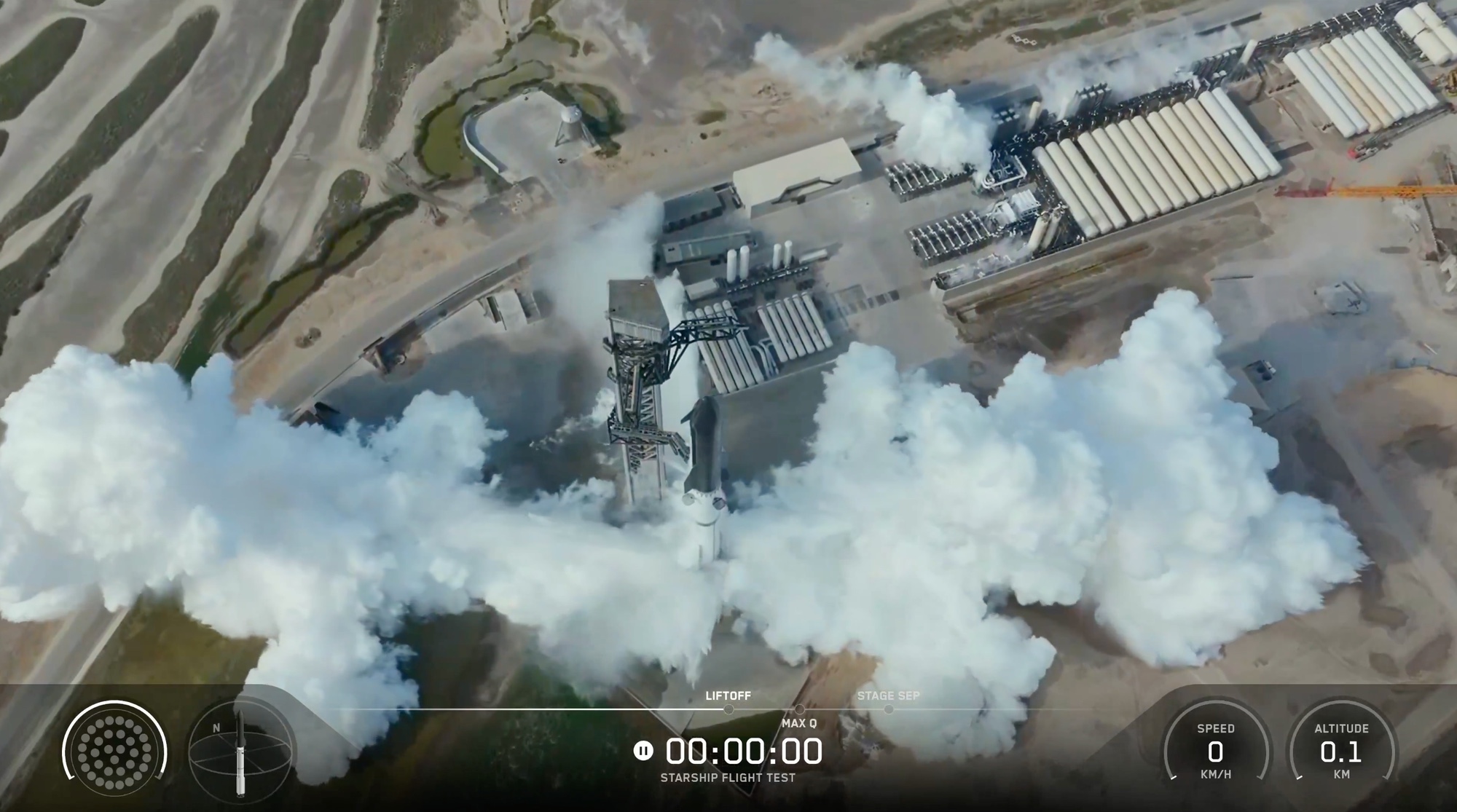
SpaceX's full-scale Starship triggered its first last-second automatic launch abort, and Flight 13 never left the pad. At 6:45 p.m. Eastern on July 16, the Super Heavy booster's 33 Raptors began ignition. Onscreen data showed four failing to start; the other 29 shut down immediately, leaving the rocket at Starbase, Texas.
Elon Musk first wrote that “some of the engines didn't start,” then said SpaceX would remove and replace two Raptors and that early next week was the most probable launch timing. SpaceX did not disclose the cause of the four ignition failures or classify the abort as a flight accident. The automated system stopped a rocket with insufficient thrust from lifting off.
Flight 13 is the second Starship V3 test and retains a suborbital profile. It carries 20 functioning Starlink V3 satellites, which were due to test solar arrays, antennas and inter-satellite communications for about 20 minutes without remaining in orbit. Each is rated for 1 Tbps downlink and 160 Gbps uplink.
It was also the first Starship launch attempt since SpaceX's June 12 IPO. After-hours shares moved from about $132 to nearly $125 within five minutes of the abort, then recovered to about $127. Neither the rocket nor the satellites left the pad.
via SpaceNews / AP / Euronews
Elon Musk first wrote that “some of the engines didn't start,” then said SpaceX would remove and replace two Raptors and that early next week was the most probable launch timing. SpaceX did not disclose the cause of the four ignition failures or classify the abort as a flight accident. The automated system stopped a rocket with insufficient thrust from lifting off.
Flight 13 is the second Starship V3 test and retains a suborbital profile. It carries 20 functioning Starlink V3 satellites, which were due to test solar arrays, antennas and inter-satellite communications for about 20 minutes without remaining in orbit. Each is rated for 1 Tbps downlink and 160 Gbps uplink.
It was also the first Starship launch attempt since SpaceX's June 12 IPO. After-hours shares moved from about $132 to nearly $125 within five minutes of the abort, then recovered to about $127. Neither the rocket nor the satellites left the pad.
via SpaceNews / AP / Euronews