Tesla FSD finally launches in China — but rivals are years ahead
TL;DR
Tesla launches FSD in China after years of waiting — but as Level 2, hands-on-wheel. Xpeng Mpilot already holds 60.1% of China NOA share; Baidu Apollo Go runs commercial robotaxis.
After years of waiting, mountains of regulatory paperwork, and a well-timed presidential state visit, Tesla finally launched FSD (Full Self-Driving Supervised) in China. Announcement came a week after Musk accompanied Trump to Beijing — whatever role that visit played in clearing the last regulatory hurdles, the result is now reality.
But this is Level 2, not robotaxi. Tesla FSD in China runs as a Level 2 system — driver must keep hands on the wheel, attention on the road. Same tier as systems already deployed by many Chinese rivals — and far from the robotaxi future Musk has promised for years.
Domestic rivals long since arrived. Baidu Apollo Go and Pony.ai run commercial driverless ride-hailing in China. Xpeng's Mpilot system holds 60.1% of China's NOA smart-driving market. Xpeng's president has publicly said Chinese autonomous driving has already passed Tesla FSD for domestic road conditions, predicting Level 3 within two years and Level 4 within four.
Tesla's home-court disadvantage. Domestic players like Xpeng and Huawei have been collecting China road data for years — home-court advantage is real. China's road environment is complex; high-density cities, distinct traffic habits, and infrastructure differ sharply from the North American highways FSD was originally developed on. Only good news: Tesla has built local AI datacenters in China and deployed localized training — finally trains models on Chinese road data.
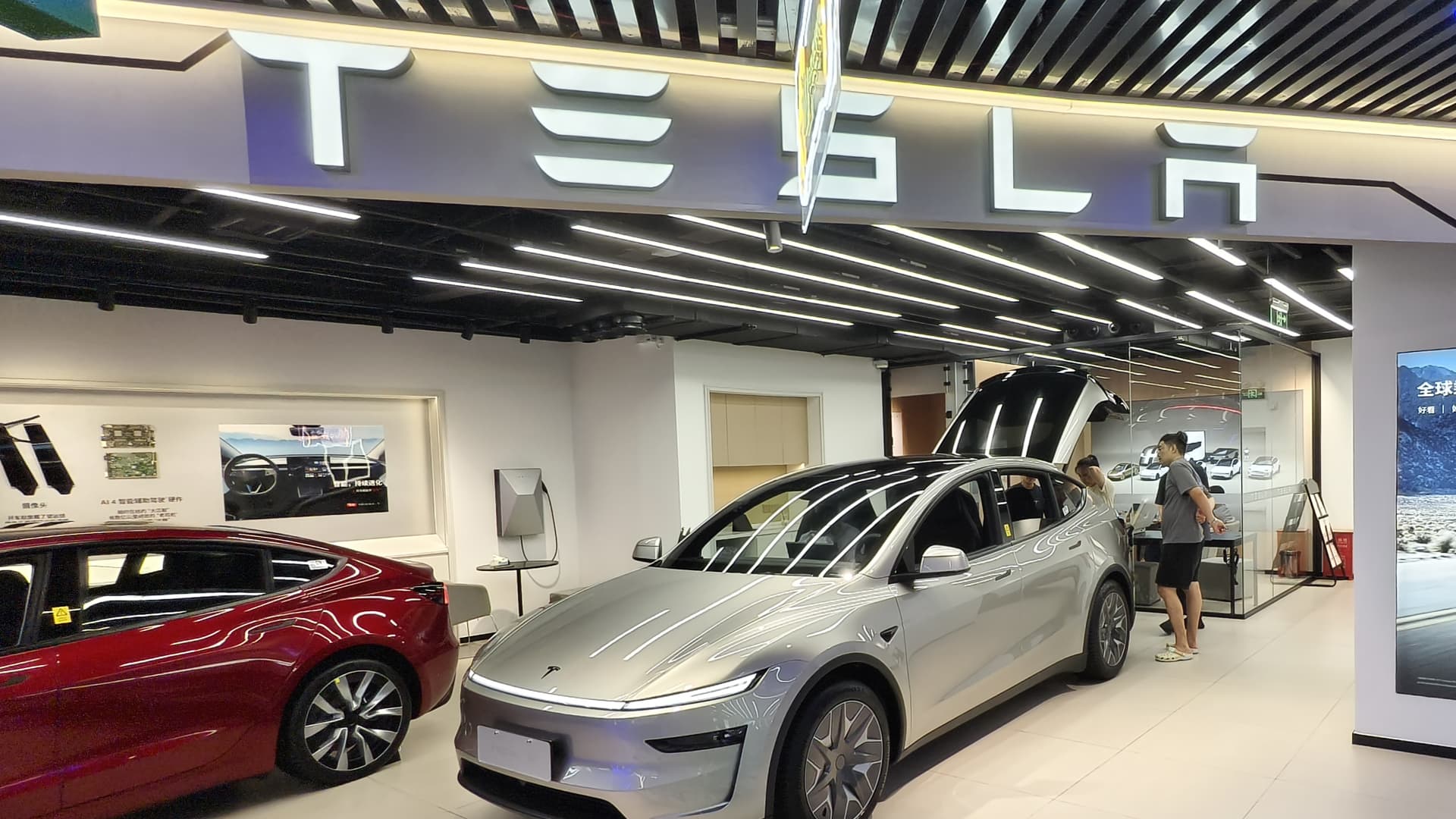
April Tesla China sales: 79,478 vehicles, +36% YoY but -7.2% MoM. The brand still has pull, but pressure continues.
via CNBC
But this is Level 2, not robotaxi. Tesla FSD in China runs as a Level 2 system — driver must keep hands on the wheel, attention on the road. Same tier as systems already deployed by many Chinese rivals — and far from the robotaxi future Musk has promised for years.
Domestic rivals long since arrived. Baidu Apollo Go and Pony.ai run commercial driverless ride-hailing in China. Xpeng's Mpilot system holds 60.1% of China's NOA smart-driving market. Xpeng's president has publicly said Chinese autonomous driving has already passed Tesla FSD for domestic road conditions, predicting Level 3 within two years and Level 4 within four.
Tesla's home-court disadvantage. Domestic players like Xpeng and Huawei have been collecting China road data for years — home-court advantage is real. China's road environment is complex; high-density cities, distinct traffic habits, and infrastructure differ sharply from the North American highways FSD was originally developed on. Only good news: Tesla has built local AI datacenters in China and deployed localized training — finally trains models on Chinese road data.
April Tesla China sales: 79,478 vehicles, +36% YoY but -7.2% MoM. The brand still has pull, but pressure continues.
via CNBC